
By Melissa Converse
MacGuffin Fellow for Schoolcraft College in partnership with KicksART Farmington
2024 marked the fortieth anniversary for The MacGuffin, an international literary magazine published out of Schoolcraft College. As a student at Schoolcraft College and the first MacGuffin Fellow, I conducted interviews with regional writers and editors to learn more about their perspectives on issues of writing and art as those relate to our world – both near and far. Each of these interviews lasted approximately an hour. In the coming weeks, I will publish four columns that draw on these interviews to explore themes of writing, the Midwest, and what it means to produce art in the post-Covid post-industrial world. Each column will highlight excerpts of conversations with these writers and editors and make connections across the four themes that emerged : Community, Empathy, Connection, and the Power of Change.
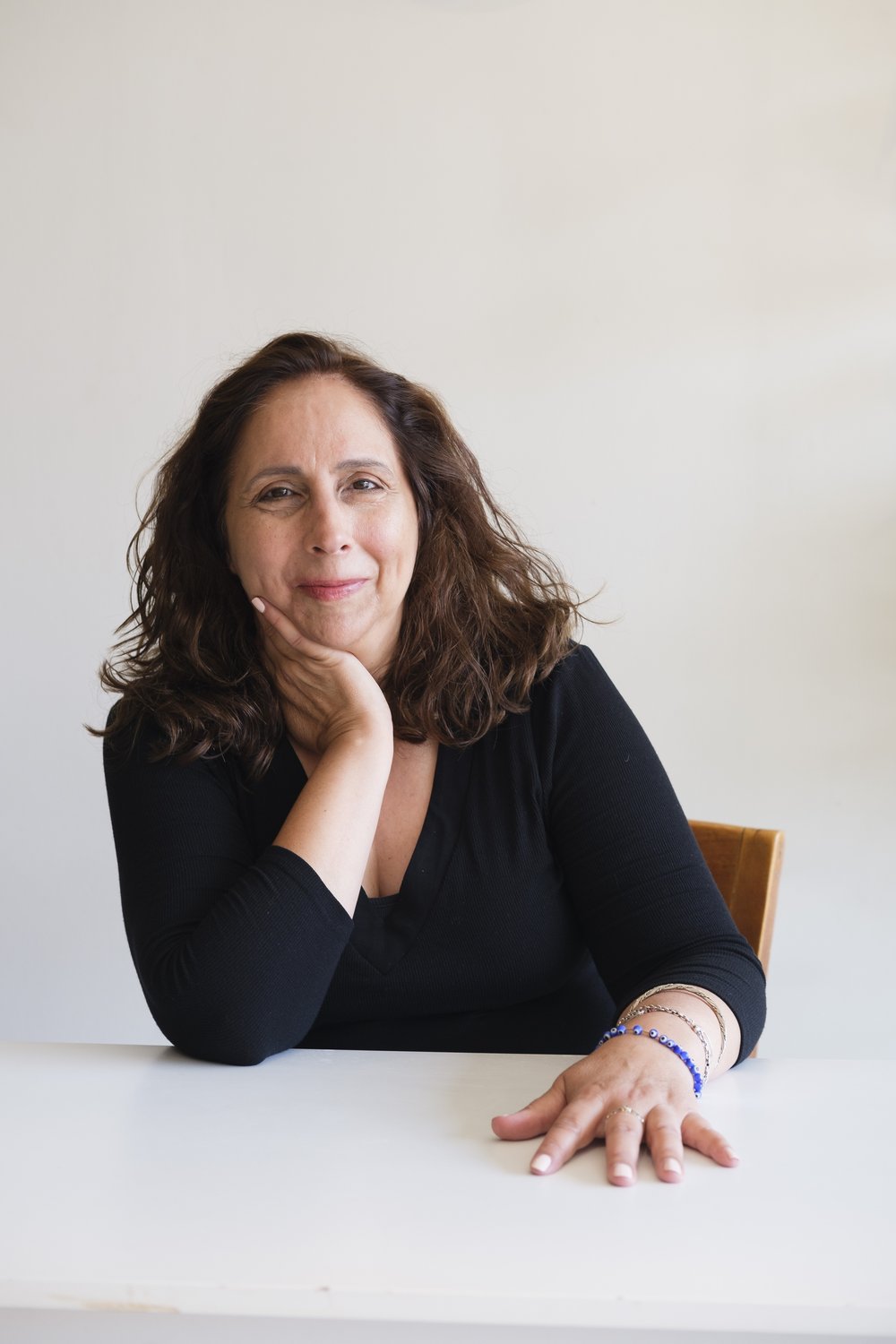
The first of these columns features Detroit poet, Alise Alousi. Please grab a cup of tea and enjoy what Alousi has to say about her craft and our world.
I first met Alise Alousi at AWP24 in Kansas City this past February. We sat down later that month for tea lattes and conversation in Royal Oak, Michigan. Alouis’ commitment to connecting with those around her – in this case, me – is admirable given her very busy schedule and as the Director of School and Community Partnerships with InsideOut Literary Arts in Dearborn, Michigan, not to mention her writing endeavors and author deadlines. This commitment to connection is what makes Alousi tick. Her level of empathy and heart are evident on paper and also in person.
Alousi’s work and poetry highlights this commitment to connection. When I asked her to define herself, connection was at the forefront, “I think of myself as a poet…But it’s more (than that). I think, sometimes, (it’s) a way of being in the world too that really matters… to be somebody who’s tuned in. Not just (to) the beauty in our world, but the hard challenges in our world that we face. And whether we choose to write about every one of those things I don’t think really matters. …pick what matters to you and write about it, but be somebody who notices the other stuff.”
Alousi went on to describe the numerous ways she self-identifies and the communities in which she finds connection. She is an Iraqi-American, mother, daughter, friend, mentor, mentee, and (my personal favorite descriptor) “life colleague.” I asked her how she found her communities and whether they happened organically or were something she had to create. She spoke at length about the writing community, both locally in Detroit, regionally and even nationally: “In all my years of being a part of different communities in Detroit, particularly the writing community – there’s something really special about that space and the opportunities to connect through workshops, through events, through hanging out and doing your own writing, talking about your writing, finding people who were doing similar things and not so similar… some of it’s created for sure. And some of it, sort of, just appears.”
Our dialogue probed deeply into what connection means to society as a whole and how empathy can be developed through art. Alousi spoke openly and candidly, with compassion, about the sensitive issues plaguing our world right now – both near and far; atrocities taking place at a seemingly warp speed. But through it all, Alousi maintained a position of hope. She returned time and time again to her art as a way of both researching the world around her as well as connecting to it. At the time of the interview, Alousi was immersing herself into Palestinian writings as a way to develop empathy and understanding. She also has done this (and continues) with BIPOC authors, Detroit based and beyond. Seemingly, her ethos is one of questioning in order to understand as fully as possible before settling on her beliefs. She is flexible and humble – something present throughout her poetry. “Through poetry I can, in a small package, have a window into somebody’s experience of this situation that really can highlight something that maybe in some ways supersedes (conflicts between groups)… That creates empathy, or creates space for it.” Alousi hopes her word is seen as a window into her world and beliefs as well.
I asked Alousi if she believes art has the power to effect social change. “I do think that the arts and poetry have the potential to really impact that (social change) for sure. I think you learn about yourself first as a writer and then figuring out who you are through writing is such a beautiful thing to experience. It makes you curious about other people and poets and poetry and like ‘ohh what are they doing in this home? What is their experience that led them to write this poem?’ How can I think about that?”
Alousi lit up when I asked about current and future projects and was eager to share her current inspiration – again – centers around connecting with and through others lived experiences: “I’m working on what might be a chapbook. It might be a full-length collection. But it’s really thinking about things like work and capitalism and chat and sleep and rest, …sort of all of those things. So I can balance how those things impact us in our lives. I’ve been working on a series of poems about sleep and imagining different people and what they marinate about before they go to sleep or what keeps them up at night. So I’ve got a teacher, a prisoner, a journalist and the like… I don’t know if I have the words to completely describe what it is, but I think it’s looking at all of those things. Like definitely I’ve had years in my life where writing has been less possible for me because of things like work and realities. Parenthood for women and whatever the case may be… And so I’d like to find a way to kind of tell that story, sharing through that whimsy, but also, you know, also looking at things like the environment.”
As you can see, Alousi isn’t afraid to tackle small and big issue alike. But always with a heart firmly built on a foundation of empathy and desire for understanding and compassion.
The next column published will feature Michigan native Lisa Wheeler whose children’s books have charmed the world for the last 22+ years! Wheeler brings a candid and whimsical voice to the author-world. You’ll not want to miss what she has to say!
A great job Dwayne, wonderful insight into the person and into the places from which her work eminates. Thanks and I look forward to reading more.
I’ll look forward to reading Carolyn Forche’s book, WHAT YOU HAVE HEARD IS TRUE, and her poetry.